Your next phone plan could come from the same company that lands rockets on boats. On Thursday, SpaceX announced a deal to buy a nationwide block of wireless spectrum, and it isn't being subtle about why. It wants Starlink Mobile to sit next to Verizon, AT&T and T-Mobile as a real US carrier.
https://twitter.com/SpaceX/status/2108291133025698301
What SpaceX actually bought
SpaceX agreed to acquire Grain Management's nationwide 800 MHz license portfolio. SpaceX describes it as "up to 14 megahertz of paired spectrum in the 800 MHz band." Neither side disclosed financial terms, and the deal still needs approval from the Federal Communications Commission.
Low-band spectrum is the part of the airwaves that travels far and gets through walls. That is exactly the gap SpaceX says it is trying to close. "This prime low-band spectrum addresses one of the key remaining technical gaps that will pave the way for Starlink Mobile to become a major mobile carrier in the US," the company said.
It also explained how the new airwaves fit with the 2 GHz spectrum it already bought from EchoStar. That spectrum handles high-bandwidth capacity, while the 800 MHz licenses add a coverage layer "that ensures Starlink Mobile's signal penetrates through obstacles, such as walls, and can provide service to customers' devices even when they are in buildings."
Elon Musk put it more bluntly on X: "This is the last critical piece of the spectrum puzzle needed for SpaceX to provide complete phone coverage in America."
The timing helps. The announcement came right after the FCC approved SpaceX's plan to launch 15,000 second-generation Starlink Mobile satellites, which SpaceX says will deliver more than 100 times the bandwidth of the current generation.
What it means for your phone
For now, nothing changes on your phone. SpaceX hasn't said when service using the new spectrum could reach customers, and the FCC still has to sign off.
The pitch is where things get interesting. SpaceX says Starlink Mobile would be "the first network operator to deploy both satellite and terrestrial spectrum," calling it "one network that provides Americans with a reliable service indoors, outdoors, in cellular dead zones, and everywhere in between." The licenses are built for service from cell towers on the ground, not just satellites. So the plan is a hybrid network, with ground infrastructure that SpaceX would still have to build.
Why Verizon, AT&T and T-Mobile should care
Wall Street reacted immediately. CNBC reported that shares of AT&T, Verizon and T-Mobile tumbled in extended trading after the news.
The relationship was already tense. Last week, the three carriers formed a joint venture focused on satellite and direct-to-device coverage in underserved areas, and Starlink was notably absent. T-Mobile has also removed mentions of Starlink from its T-Satellite promotions.
Not everyone thinks the big three are in trouble yet. "This adds fuel to the fire in the battle between SpaceX and the mobile operators," industry analyst Tim Farrar of TMF Associates told CNBC. "But it's still a very limited amount of spectrum and to get reliable building penetration in urban areas SpaceX would have to deploy towers on the ground."
Still, SpaceX isn't starting from zero. Starlink had 12 million subscribers in 205 countries as of June 30, according to the company's second-quarter report. Turning some of those customers into phone customers is clearly the plan, and the race for your monthly bill just got a lot more crowded.
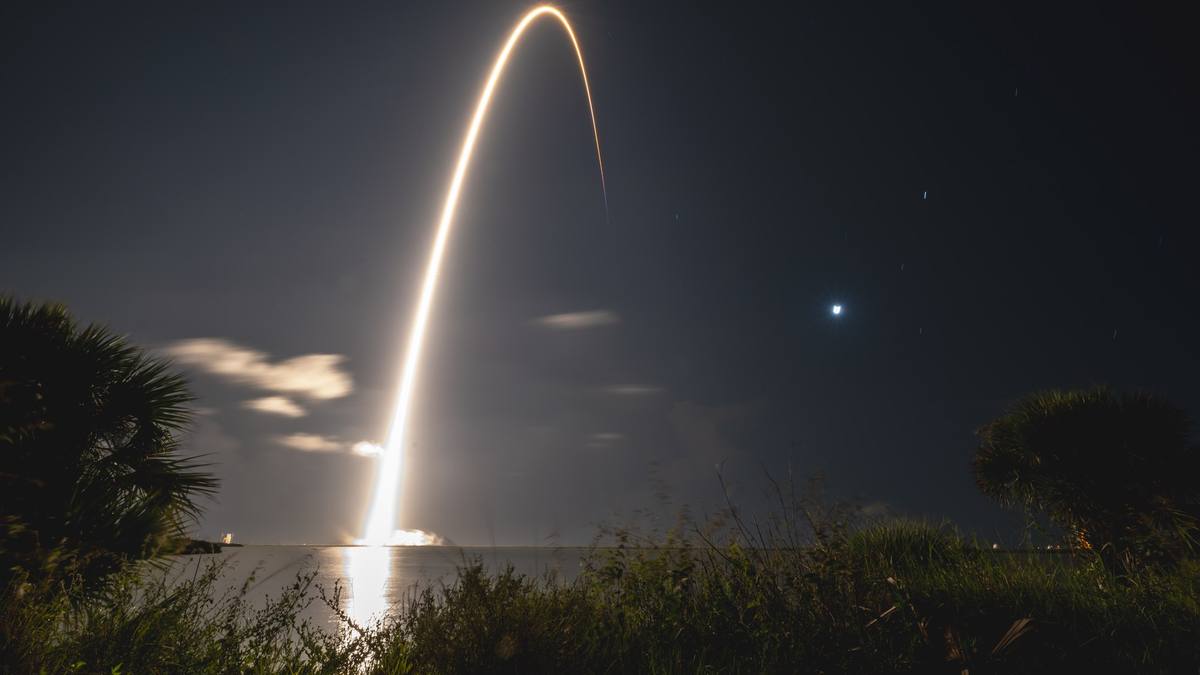
Photo: U.S. Space Force photo by DeAnna Murano / Wikimedia Commons (Public domain)