The Pentagon was ready to put a military execution on screens for the first time in American history. On Thursday, President Donald Trump hit stop.
In a post on Truth Social, Trump said the firing squad execution of Nidal Hasan, the former Army psychiatrist who killed 13 people at Fort Hood in 2009, will go forward as scheduled but will not be livestreamed.
"I think streaming the execution for all to see might have been a strong deterrent for the World to witness how America deals with Terrorists and SCUM like Hasan but, many very good and well meaning people would rather not watch him die, through streaming, or through any other visual device," Trump wrote. "He will die, as scheduled, by firing squad, but this event will not be streamed."
He added that immediate family members of the victims can watch in person if they choose. "They deserve to witness JUSTICE!" Trump wrote.
How We Got Here
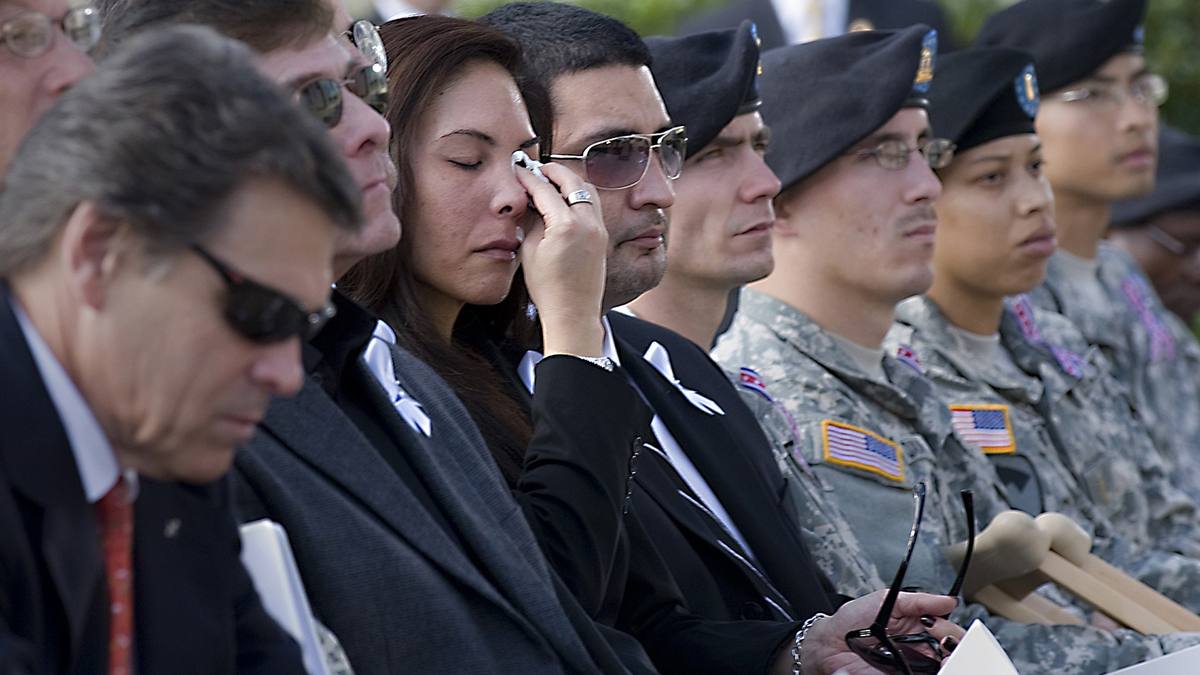
On Nov. 5, 2009, Hasan, then an Army major, opened fire at Fort Hood, Texas, killing 13 people and wounding more than 30. He was shot by police during the attack and left partially paralyzed. A military jury convicted him on all 42 counts in August 2013 and sentenced him to death five days later.
The appeals took more than a decade. According to the Army, the Supreme Court declined to review his case on March 31, 2025. Under military law, only the president can approve a death sentence for a service member, and Trump did so on Oct. 2. Acting Army Secretary Adam Telle then set the date: 1 p.m. Central on Dec. 3, at Fort Hood. Army regulations require the date to fall 60 to 150 days after presidential approval.
If carried out, it will be the U.S. military's first execution since Army Pvt. John Bennett was hanged in 1961, and its first by firing squad since 1945, according to the Death Penalty Information Center.
The Backlash
The livestream idea came from Defense Secretary Pete Hegseth, who floated it in an interview with conservative activist Jack Posobiec. "We'll make sure that people are able to watch it, that it's public, because people need to understand that there's serious consequences for these types of things," Hegseth said.
The pushback came from both parties. House Speaker Mike Johnson told CBS News that "the concern would be that you would create a video that would be a recruiting tool for future terrorists." Vice President JD Vance said he would not watch the execution.
Pentagon chief spokesman Sean Parnell said Hegseth and Trump talked before the reversal. "The Secretary supports the President's decision, and they are completely aligned," Parnell said in a statement.
What Comes Next
A stream would have put the U.S. in rare company. According to Amnesty International, Afghanistan and Iran were the only countries known to carry out public executions last year. The last public execution in the U.S. appears to have been in 1936, according to the Death Penalty Information Center.
For the families of the 13 people killed that day, the wait has lasted nearly 17 years. Dec. 3 is still on the calendar, and they're the ones who'll get to decide whether to be in the room.
Photo: U.S. Army / Wikimedia Commons (Public domain)