The Fed blinked. Sort of.
On Wednesday the Federal Reserve left its benchmark interest rate alone, keeping the federal funds target range at 3.75% to 4%. It's a pause after last month's hike, not a retreat, and the statement makes it pretty clear the inflation fight isn't over.
The decision
The Federal Open Market Committee voted 10–2 to hold, according to the Fed's official statement. The range has sat at 3.75%–4% since the central bank approved a quarter-point increase in September, CNBC reported. AP noted that was the Fed's first rate hike in three years.
CNBC called Wednesday's hold "widely expected."
Two officials wanted to go further
The two "no" votes came from the hawkish side. Fed Governor Lisa Cook and Cleveland Fed President Beth Hammack both wanted to raise rates by another quarter point at this meeting, according to the Fed statement.
According to CNBC, this was Cook's first dissent since she joined the Fed in 2022. Her vote comes while President Donald Trump is still trying to remove her from office over allegations about information on her home loan applications. CNBC reported that the Supreme Court blocked his earlier attempts, that the administration has restarted the effort, and that a hearing is scheduled for early November.
Reuters described Hammack as "a consistently hawkish voice" who also dissented in July for the same reason.
What the Fed actually said
Here's the key line from the statement: "Inflation remains elevated. The accumulation of more information will help the Committee determine the policy stance appropriate to ensure a timely return of inflation to the Committee's 2 percent goal. The Committee will deliver price stability."
The Fed also turned more upbeat on the economy, saying activity is "expanding at a strong pace." CNBC and Reuters both noted that was an upgrade from "solid" in September. The statement says job gains "have kept pace with the workforce" and that capital investment is "robust."
According to Reuters, the wording hints at further hikes depending on inflation. Reuters said that's the kind of forward guidance Fed Chair Kevin Warsh has said he wants to avoid.
Why wait?
CNBC reported that inflation has been above the Fed's 2% target for more than five years and has sped up since the September meeting. So why hold? In the weeks before the meeting, Vice Chair Philip Jefferson and New York Fed President John Williams both said conditions give policymakers time to weigh their next move, according to CNBC.
The calendar matters too. The midterm elections are on Nov. 3, and CNBC noted some observers have speculated that officials won't want to raise rates this close to an election.
Warsh started his post-meeting press conference at 2:30 p.m. ET. He said financial conditions have shifted since the September hike: "We have started to see some changes in financial and credit conditions; they have tightened for some businesses and households, much as we would expect," according to CNBC. CNBC also reported that he stopped short of calling conditions broadly "tight." You can watch the full press conference on the Fed's YouTube channel:
How markets took it
Wall Street mostly shrugged. As of 2:05 p.m. ET, AP reported the S&P 500 up 0.1% and within 1.1% of its all-time high. The Dow was up 107 points, or 0.2%, and the Nasdaq was down 0.1%.
Bond yields moved up. As of 2:29 p.m. ET, Reuters had the 2-year Treasury yield at 4.776% and the 10-year at 5.047%, about 5 basis points higher on the day. The 10-year is the benchmark for mortgages, auto loans and credit card rates, as CNBC pointed out.
Karl Schamotta, chief market strategist at Corpay, told Reuters that two dissents "rather than the three or four many had expected is a dovish surprise at the margin." He added that the upgraded view of the economy "should leave markets in no doubt that more tightening is coming."
What's next
Traders are already looking at December. CNBC reported that CME's FedWatch tool put the odds of a quarter-point hike at the Dec. 9 meeting at about 85.7%.
More data lands Thursday: the PCE inflation index (the Fed's preferred gauge), quarterly GDP, and personal income and spending numbers. As TruStage chief economist Steve Rick told CNBC, "Holding rates steady doesn't necessarily mean the Fed is finished raising them, especially if inflation doesn't start to cool."
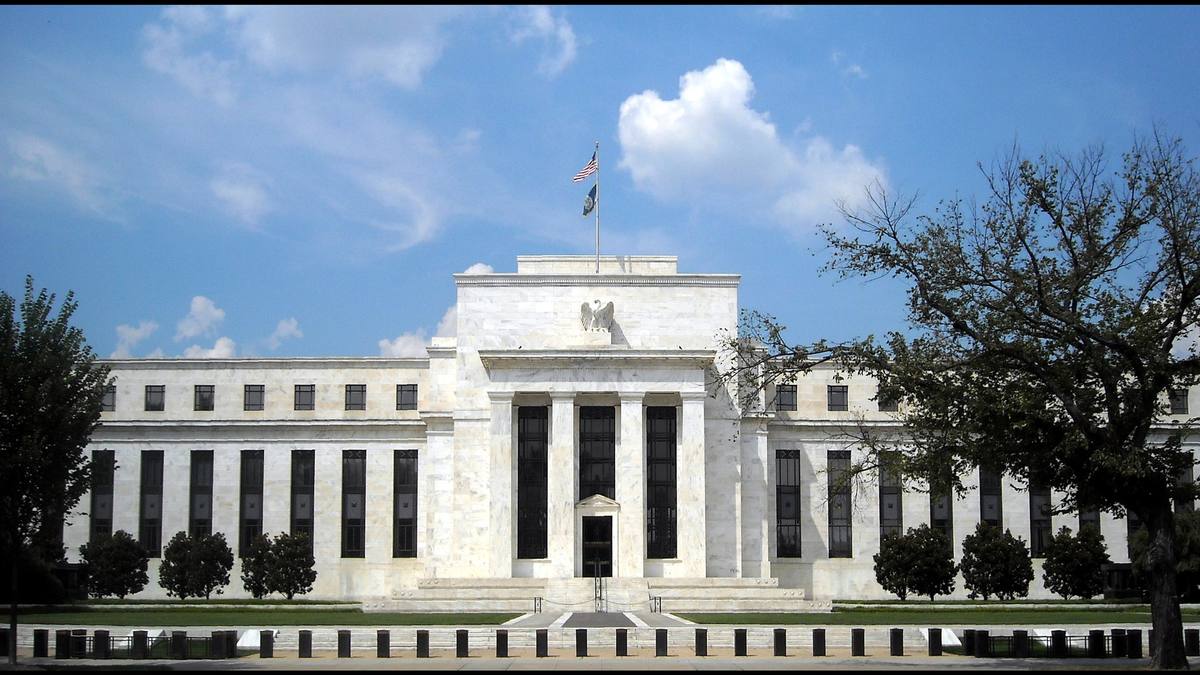
Photo: AgnosticPreachersKid / Wikimedia Commons (CC BY-SA 3.0)